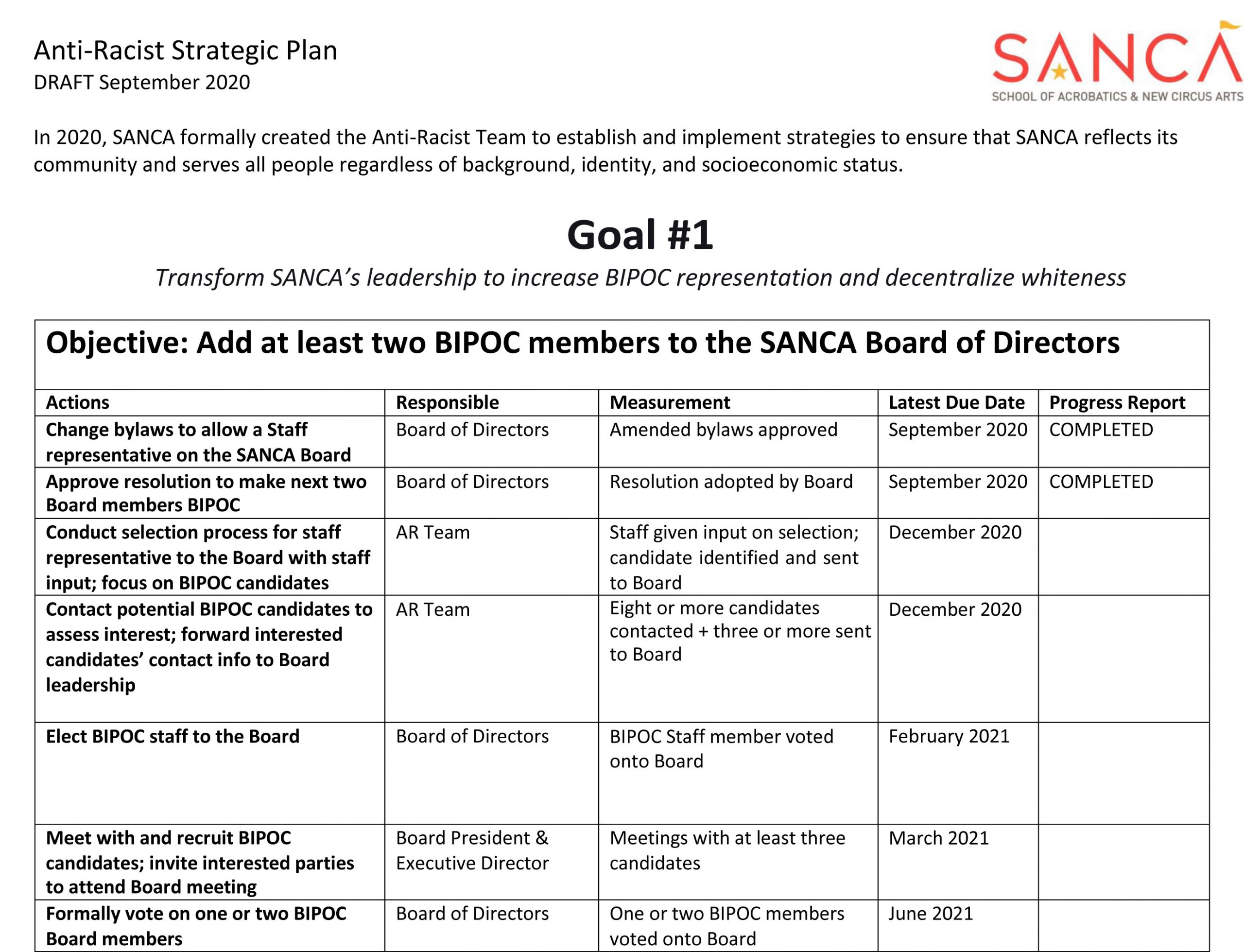
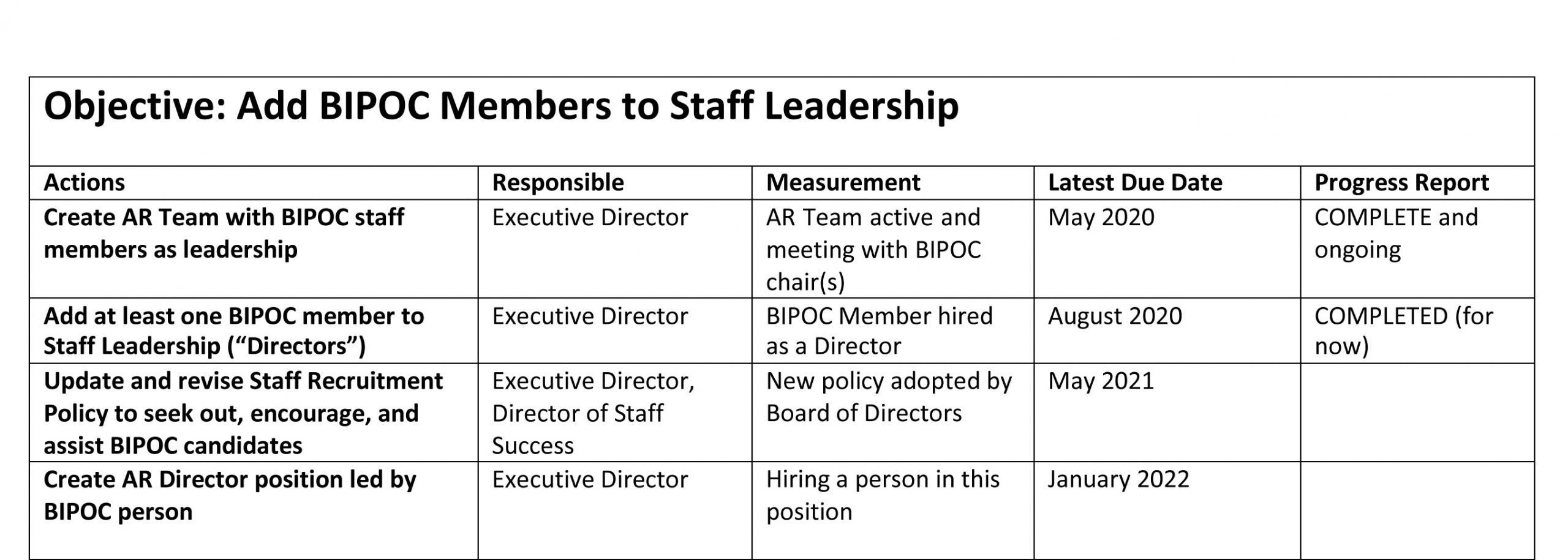
In April 2020, SANCA formally created the IDEA (Inclusivity, Diversity, Equity, and Anti-Racism) Committee to establish and implement strategies to ensure that SANCA reflects its community and serves all people regardless of background, identity, and socioeconomic status.
This page, and the plan listed below, serves that effort by providing transparency about SANCA’s IDEA efforts with supporters, staff, and students, as well as with the larger Seattle and King County communities it represents. SANCA recognizes that we are just beginning this work. There is a considerable amount of work to do to unseat policies, practices, and systems that uphold white supremacy.
Manjit Golden
Further, this page is not meant to applaud SANCA for tackling this work or exist as a performative gesture. Instead, the effort is meant to point to the fact that SANCA is behind the curve in addressing systemic racism in its operations and needs to take appropriate action. That work cannot be taken on rapidly and needs careful consideration and planning. This page expresses our beginning effort so that SANCA is transparent and open with its constituents about the journey we are undertaking.
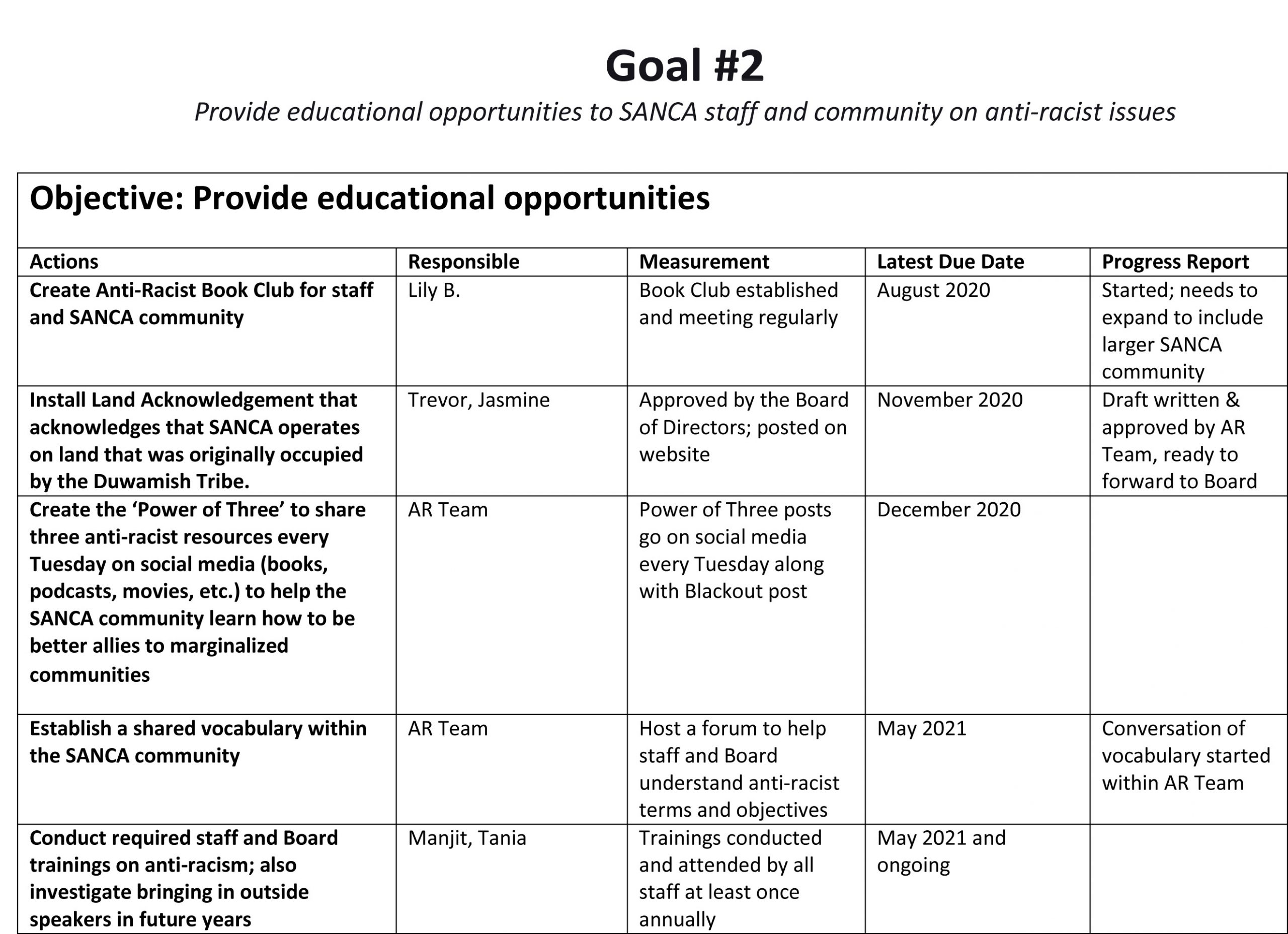
Check out the Anti-Racist Book Club! This (online) space is set up for education for white people by white people to relieve Black and Brown community members (often femmes) of the exhaustive labor of education. However, all are welcome to join! We will meet monthly to learn from readings, think critically about our actions in our own lives, and find ways to start or continue to support Black people in the circus community and in all aspects of life. This is a space for learning, come as you are and with a mindset of growth. Register here.
The IDEA Committee is co-Chaired by Manjit Golden and Tania Nambo-Escobar. Other Team members include Lily Baumgart, Alyssa Hellrung, Megan Strawn, Emma Cady, Octavia Graham, Trevor Asbury, Jasmine Manuel, John Tannous, Amber Parker, and Sam Vasquez.
If you would like to provide input on this plan or if you are interested in joining the IDEA Committee, please contact co-Chairs, Manjit Golden and Tania Nambo-Escobar.
This plan has been approved by the SANCA Board of Directors as of October 2020.
SANCA is excited to announce a new grant from ArtsWA and the NEA. We are grateful for their support of circus arts and SANCA, especially during the COVID pandemic.
The Washington State Arts Commission and the National Endowment for the Arts has awarded SANCA a $3,000 general support grant. This grant will support, in part, continuing Circus at Home online classes for our community in 2020 & 2021.
Student Sara Kostetzer- Intermediate Acro-Yoga Online
Partner work is an incredible way to work out, not just because you are using your own body and another person’s body to strengthen your muscles, but you are also learning to build strength in trust and communication through your practice. Sara and her partner Eduardo are perfect examples of two students who have built a beautiful foundation in partnership and have learned to strengthen themselves along the way. Sara says she had always wanted Eduardo to join her in her SANCA classes before the pandemic, but their physical distance from the SANCA gym, and work schedules always made it so difficult to get to the classes they wanted to take. But when the news came to shut down the gym, and quarantine orders were in place Sara and Eduardo found SANCA’s online offerings and the class they had always wanted to try together was now available in their own home. Now, three months later, they adore their online class. They have rearranged their weekly workouts, and business meetings so they can make it on time every time. “This is a class we enjoy so much, not only as a workout, but mostly as a couple. This is a moment to connect, work together, enjoy each other, build trust and more than ever, strengthen our relationship.”
Sara and Eduardo are so fun to have in class and to watch them grow is nothing short of amazing. They started out working on basic foundational skills, and trying new things with a bit of caution, but now they are in the advanced class nailing skills with beautiful grace and strong technique. “We need to get the good out of the bad and surely enough, your class has been a highlight of the times we live in.”
As their instructor, it’s impossible not to be impressed with their unwavering dedication to improving themselves and their relationship. Sara and Eduardo are truly an inspiration and a value to our online SANCA community.
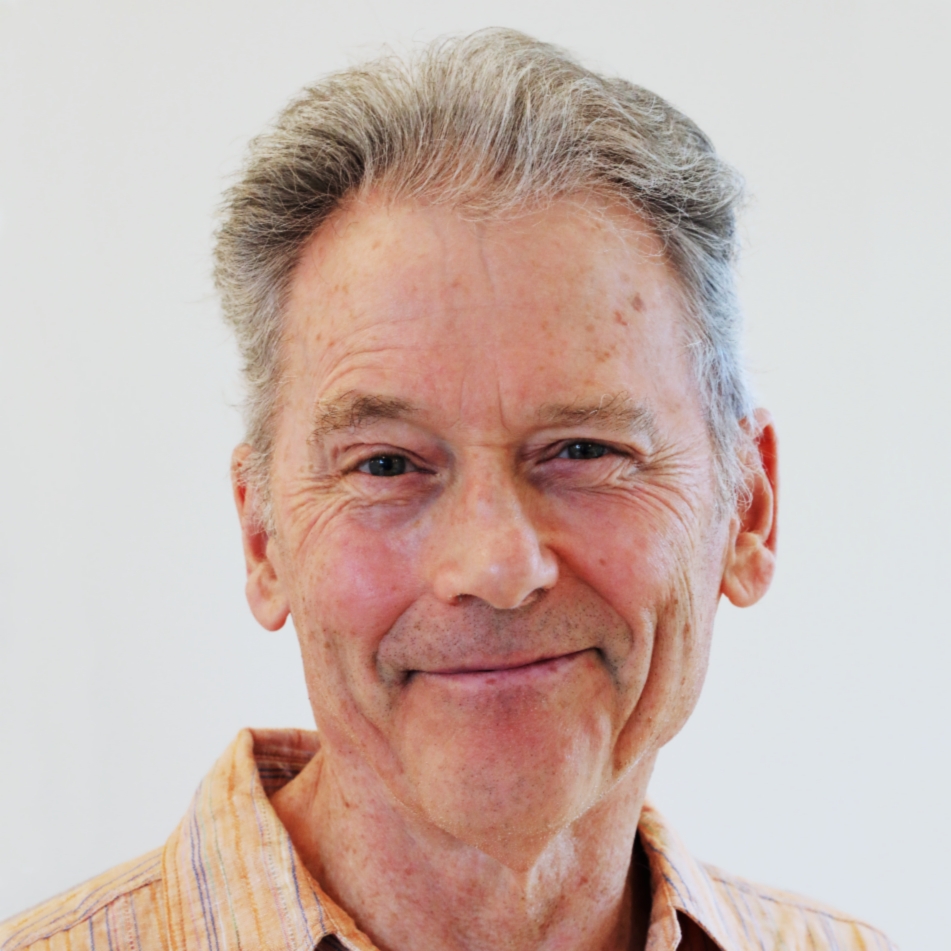
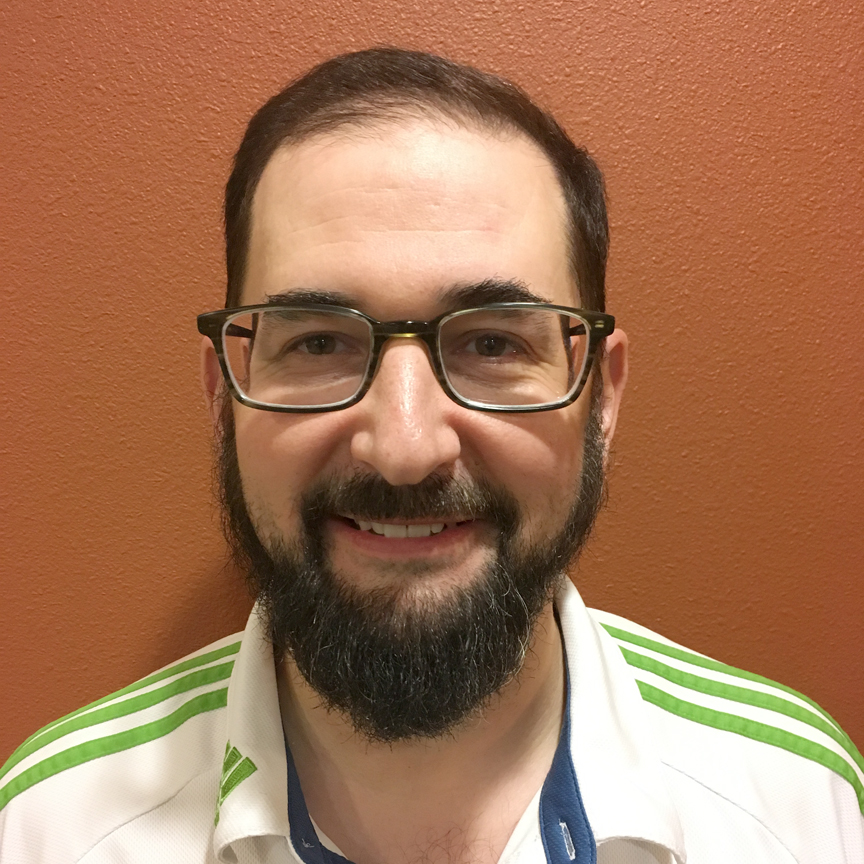
Kevin joined SANCA’s Board of Directors in the fall of 2019, but he and his family have been a part of our SANCA community since our early days. Kevin retired from the world of writing software in 1997 to be an at-home dad. Kevin previously served on the Board of Northwest Girlchoir for seven years, including two years as Board President. He has degrees in Physics and Computer Science. During his twenties, his creative outlet was Modern Dance, and he is pleased to now find artistic expression in circus. Kevin also enjoys photography and took formal and performance photographs for Northwest Girlchoir for many years, and several of his photos from SANCA’s flying trapeze tent have appeared on the SANCA website. Other hobbies include Alpine skiing, open water swimming, martial arts, hiking, travelling, and languages (French, Italian; some Spanish, Mandarin, Vietnamese; a little Latin, Irish, Japanese, Icelandic, German, Greek, Esperanto).
SANCA: How did you become involved with SANCA?
Kevin: A friend told us about SANCA and we came to the first open house. There, we tried some wire walking and met the friendly people.
SANCA: How has SANCA impacted your life?
Kevin: Our kids did camps and classes for many years, including 6 years of weekly flying trapeze. They developed self-assurance through developing physical skills. My son did a year with the P3 program, which involved a lot of consistent work, culminating in a final performance, of which he was justifiably proud.
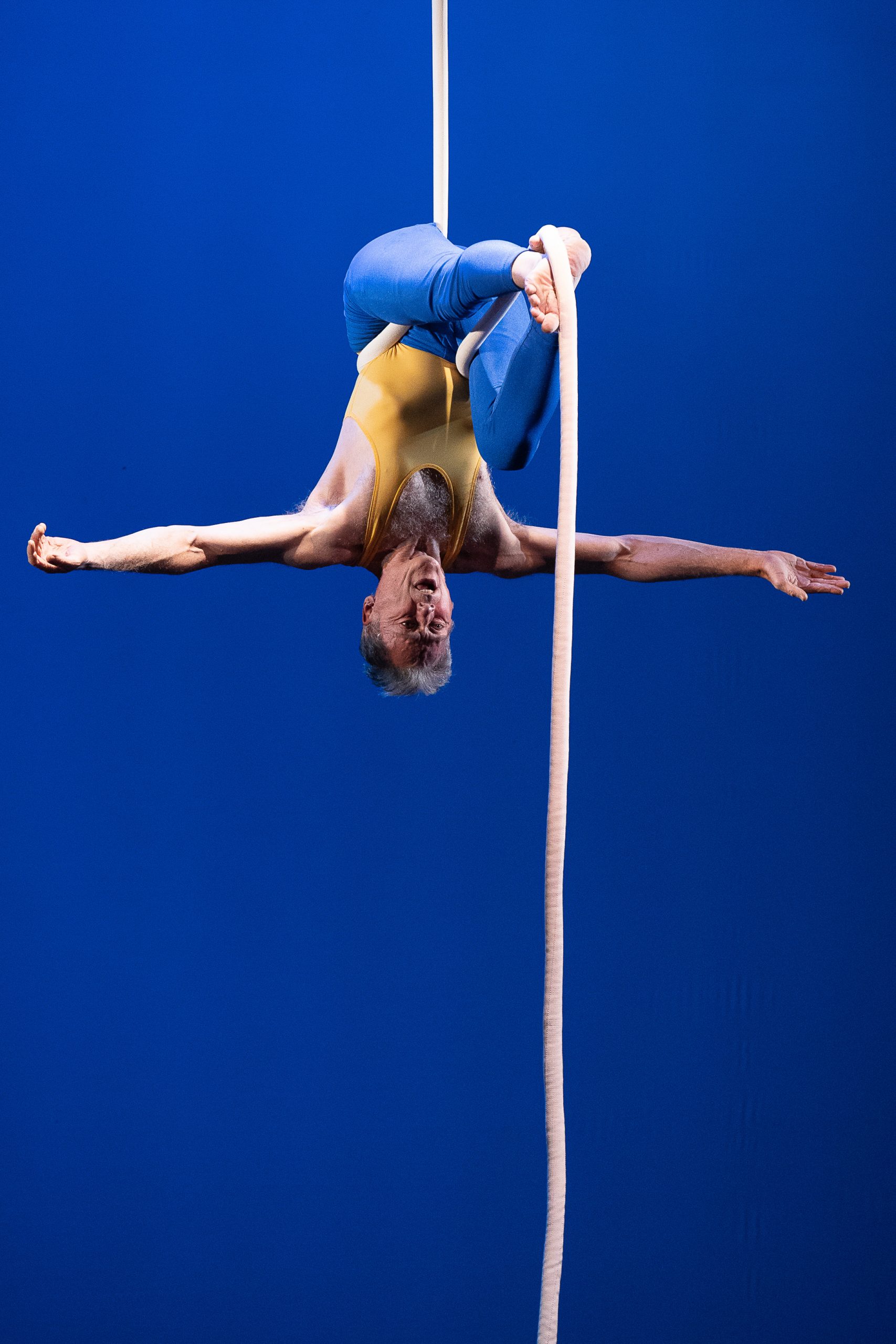
After watching my kids’ classes for many years, I signed up for an aerial class in 2013 and gradually began training more intensively, specializing in corde lisse. I have performed several times since, both with SANCA and with other groups. It has given me a means of creative expression which I had been missing for many years. I’ve also taken several trampoline classes and Cyr wheel lessons.
SANCA: Do you have a favorite circus discipline?
Kevin: Corde lisse.
SANCA: What circus skill have you learned that you’re most proud of?
Kevin: A few years ago, my coach asked me what I wanted to work on. My answer was unclear, but he thought I wanted to work on the hipkey climb, so he demonstrated a beautiful, flowing hipkey climb. This seemed way beyond what I could do then and I was impressed that he thought me capable of such a thing. I studied the video of his demonstration and practiced, and a few weeks later I was able to do a rudimentary form of hipkey climb. This was a milestone for me. It seemed like walking into a wall and passing right through it.
SANCA: What inspired you to serve SANCA’s community as a Board Member?
Kevin: In 2019, Dan Bridge, then Interim Executive Director, asked me to join the Board. Dan and I knew each other from working together years before, so I listened when Dan told me he thought I could be of some help to SANCA. SANCA is a force for good in the community and I was more than happy to see if I could help it develop further.
SANCA: We’re facing challenges now with the COVID-19 pandemic. How has your view of SANCA’s role as an arts organization in Seattle changed or been influenced by this challenge?
Kevin: SANCA has been trying to continue to provide a place where people can experience the joys of circus arts, but it has been really difficult because of the dangers to staff and students from COVID. I’ve been very impressed by the creativity that SANCA has shown in launching the Circus at Home online classes series so that people still have access to their beloved circus classes. Our staff have also gone to tremendous effort to modify the facility so that we can offer limited, socially distant, small classes in our large facility. We’re following King County and the State’s guidelines for Phase 2 re-openings. Many people are anxious because of the pandemic, and SANCA helps by providing an environment for constructive growth for people, which is really good for our mental health.
SANCA: Given the recent incidents of injustice and racism, and long-standing inequities that are profoundly affecting black and brown people right now, do you have thoughts on how the arts in general, and SANCA in particular, can support efforts for justice and equity?
Kevin: Black people have experienced persecution for a very long time in this country, continuing to the present day. SANCA needs to make an environment where Black people feel safe, important, and included at SANCA. Prior to COVID, SANCA had already started new efforts to do this with the formation of a Diversity, Equity, and Inclusion team. It’s led by staff members who are people of color, and they are developing action recommendations for SANCA — including a few that we’re already in the process of implementing, like sharing the stories of our BIPOC staff, students, and artists. We’ll start seeing those stories in the SANCA newsletter and with regular social media postings on Tuesdays.
We are still in the middle of so many things happening this year. We previously talked about some of the BIPOC voices in circus currently sharing their stories. This is a continuation of that prior article. It’s important for us to hear voices from varied backgrounds and insight into experiences different than our own. Here we look at 3 more voices of color currently speaking up in the circus industry.
Paris the Hip Hop Juggler recently spoke with Jonathon Iverson on In Center Ring. He joined an afterschool circus program at his school in Harlem at 9 years old and that was just the beginning. In 7th grade he joined a performing arts school where circus was part of the daytime curriculum. He originally didn’t like juggling, till he was inspired by the right teacher, and he was hooked. He got his moniker from appearing on The Today Show at 14 years old. They discuss both having parents who are immigrants who don’t see the point of non practical traditional careers. Paris lied and told his parents he wanted to be an accountant. He went a traditional route and then was inspired to follow his heart after going to watch a friend busk. He’s gone on to perform on the Daily Show, at the White House, on Sesame Street and follow his heart as an independent artist. They discuss his inspirations being Eddie Murphy and Magic Johnson who inspired him as a black youth. He approaches part of performing as ambassadorship in being himself to inspire other black youth to juggle. He’s adapting in pandemic in part by teaching an online outreach juggling program in the Bronx and performing in virtual shows including this act directly speaking about BLM.
Being an ambassador can bring growth in terms of leadership. Noeli Acoba spoke to Vicki Amedume & Bill Forchion about their experiences as leaders of color in circus recently on her Youtube Channel. They both have achieved many accolades but this interview focuses on Amedume’s experience as a female director of color and on Forchion’s experience with Cirque. Amedume says barriers in directing as a woman of color include we still tend to think of directors in this industry as white males especially as you get into bigger companies. She mentions even with all of her years and awards in the industry it’s hurtful to still be questioned if she should be in spaces. She was awarded a fellowship in the UK a few years ago that was very competitive and prestigious and had someone respond she only got it because she was black when she announced it.
Forchion shares he’d auditioned 4 times and made it to the final rounds at Cirque each time but not being hired until 10 years after he saw his first of their shows. He later in a frank discussion with someone who had been at his auditions was told it hadn’t been possible to hire him before because they couldn’t recast as replace him if he left suggesting it would only be possible to replace him with another person of color that matched his skillset. He also says how valuable his experience was in being part of Cirque to his growth and development.
In ways we could do better microaggressions being small but become heavy as they add up is addressed. Forchion said he was relieved when his thoughts were confirmed that he’d told people in the past Cirque didn’t hire Black people but it’s also such a narrow way of thinking about casting. Amedume touches on this too in terms of it’s not enough to be extremely talented when she sees many artists of color get less work. It’s also pointed out that tokenism strips away individuality as a complex human being and artist when one person is seen as a culture. A way we could address this is by casting with archetypes and make the best fit for the job all being looked at and scaled in a similar manner including artists with disabilities. It’s mentioned as part of the problem is companies and audiences look with a lens of what has been successful before. The more we invest in an endeavor it becomes more risk averse, maybe the industry needs to take more risks. Forchion started his career as a clown but found it didn’t work everywhere and transitioned to being an acrobat to work more. Amedume says she’s starting to see more professional performers of color in the UK as well as more disabled performers being represented on stages. Forchion mentions as we see people from different backgrounds were going to hear new stories and have new experiences to touch on. I for one am excited to see what the future holds in terms of diversity in representation and stories we may see when stage-lights return.
We all miss going to shows and live performances and I’m right there with you. Luckily there is still a way to watch circus performances from your couch! I was recently directed by a fellow circus colleague to a circus specific streaming service called Netflips. This service allows you to rent a recorded performance from independent circus companies from around the world, with productions being added to the site weekly. With more than 95% of the proceeds going straight to the companies and performers, Netflips is a great tool for you to stay connected with the circus at a distance, while also supporting the international circus community.
I tried out Netflips recently and was not disappointed. I watched a performance called Elephant In The Room by a small French circus troupe called Cirque Le Roux. I recommend this amazing performance but I want to warn any parents that it might not be suitable for some families or children due to partial nudity and suggestive themes. For a description of the plot, visit the Cirque Le Roux athttps://www.cirqueleroux.com/en/the-elephant-in-the-room/
First of all, the way this performance was recorded was phenomenal. It was recorded in such a way where I felt like I was watching a live performance but still had the benefit of being able to get close up views of the performers. I was blown away by this troupe’s ability to use a small theater set to convey a wide range of setting and emotion and the use of hand to hand and partner acrobatics to convey small scuffles and interpersonal relationships between characters was very innovative. I really enjoyed the music throughout the performance and the simple yet stunning film noir visuals were very aesthetically pleasing.
It is hard to pick just one scene to call my favorite but I can only describe my favorite scene as some sort of dream sequence where time seems to slow down, and two of the characters are doing a very intimate hand to hand/handstand act together. The lighting is low and there are lit up lampshades all around them that look like they are floating, it was an incredible visual effect. The culmination of all of these features drew me in so much that I almost forgot I was still at home.
You can find this performance and many others on Netflips, and if you’re like me and are itching to have live performance back in your life again, I highly recommend perusing their catalog for other circus content.
Meet Adam Noble, a Member of SANCA’s Board of Directors
Adam Noble joined SANCA’s Board of Directors in 2017 and currently chairs SANCA’s Development Committee. He works as a Business Development Executive for aerospace at Boyd Corporation, and has a degree in engineering from the United States Naval Academy. Adam served in the Navy as a nuclear-trained Surface Warfare Officer. Prior to having kids, Adam was an avid swing dance competitor, performer, teacher, and DJ. In addition to work, family, and SANCA, Adam is a zealous wine collector, a slow but enthusiastic runner, and an ardent Seattle Sounders supporter.
SANCA: How did you become involved with SANCA?
Adam: My wife Ammi took a trampoline class at SANCA before we were even married. After we had our daughter Leah, Ammi and Leah tried the Baby & Me class. Now Leah is 11 and she’s a performer in the Nimbus Circus troupe.
My first personal experience with SANCA was as parent with my son Cuyler when we took the Baby & Me class. Now I take the Adult General Circus where I work on my juggling. I also love trampoline and German Wheel, but I prefer to leave aerial arts to people with a higher pain threshold. Ammi and Leah are both still at SANCA multiple times a week, either in the fly tent or main space, or for Leah with Nimbus. I still intend to take a flying trapeze class one of these days.
SANCA: How has SANCA impacted your life?
Adam: My daughter Leah has experienced significant growth in confidence and physicality in learning to work hard as a circus artist and performer. She persisted in auditions for Nimbus after she didn’t get into the group the first time. For me, I’ve had an opportunity to try a lot of new skills and classes: trampoline, juggling, German Wheel, Strength & Flex, and wire walking are just a few.
SANCA means a lot to my family and it is my biggest commitment in giving back to the community through Board service and support. It is an enriching community for me and my family and we believe in the mission of SANCA.
SANCA: Do you have a favorite circus discipline?
Adam: I like juggling a lot, and I also enjoy balancing on the rolling globe — that is a lot of fun and I took to it more quickly than I thought I would.
SANCA: What inspired you to serve SANCA’s community as a Board Member?
Adam: I wanted to do more volunteering and community service. One day I was in SANCA’s observation room watching SANCA’s founder, Jo Montgomery, work with a young student who uses a wheelchair. He was practicing handbalancing with Jo’s guidance and it was so impressive!
I realized that SANCA was really making a difference through their Social Circus approach, the Every Body’s Circus program, and the ethos that CIRCUS IS FOR EVERY BODY. Ammi and I attended the annual Up with a Twist gala shortly after that, and the board president Gaye McNutt introduced me to another Board member, Nora, and we started talking about board service.
SANCA: We’re facing challenges now with the COVID-19 pandemic. How has your view of SANCA’s role as an arts organization in Seattle changed or been influenced by this challenge?
Adam: I am really pleased with the way SANCA has maintained a connection with the Seattle and circus community and the support these communities have provided to aid SANCA. Online classes and shows have been a very positive experience during this time. It’s really special.
SANCA: Given the recent incidents of injustice and racism, and long-standing inequities that are profoundly affecting black and brown people right now, do you have thoughts on how the arts in general, and SANCA in particular, can support efforts for justice and equity?
Adam: Shortly before the COVID pandemic started SANCA launched a new Diversity, Equity, and Inclusion Committee to advise and guide our organization’s actions in that area. It’s a good start, but we have so much work to do. It’s very important that we listen to and seek greater engagement with our BIPOC community and increase our diversity and inclusivity – among the Board and beyond. I feel like SANCA has done well in working with LGBTQ communities, but we have more work to do with racial equity.
SANCA: Add any additional information you’d like to share?
Adam: I like SANCA a lot and I want everybody else to like it too.
Wednesday, August 12, 2020, 7:00 pm – 8:00 pm
Recording available on SANCA’s YouTube channel
Hosts: John Tannous, Executive Director & Jeff Deveaux, Development Director
SANCA’s COVID response (John Tannous)
– Spring: We received a PPP loan that helped us through the spring and we started online classes.
– Summer: We have been able to add small camps and classes. Online classes are successful and here to stay as they are introducing people to SANCA and helping us to connect with people all over the world. – Fall: We will start online registration for the first time. – THANK YOU to the many families, students, organizations, and supporters who have helped SANCA VID by making gifts of support and donating spring tuition payments to help us through the COVID pandemic.
COVID Safety
– Our mission has always been about health, so we are doing everything we can to make sure that circus is a safe as possible.
– We have gotten phenomenal feedback from parents and from students attending classes. People have said that it is safer than the grocery store. They feel that we have gone above and beyond.
– The coaches have come up with new, safe, fun ideas like virtual pajama parties.
– Our safety measures include:
Remote registration
Limited entry to the gym
Temperature checks
Social distancing and face masks
Cleaning and sanitizing — by coaches and students after every lesson
Large bay doors open for fresh air circulation
Interview with Jo Montgomery, SANCA Co-founder and a Nurse Practitioner
JT: Is it possible for us to do circus safely during COVID? Jo: It is safe to go to THIS gym because SANCA has good air circulation, high ceiling height and SANCA is following the Governor's guidelines for social distancing and mask-wearing. The way you have changed the space to move people around, e.g. with arrows, is great.
JT: You are beloved for your role in creating an amazing space for the circus community. You had an initial vision. How well is SANCA meeting that vision now? Jo: From the beginning, we had three main goals: 1) To provide excellent circus coaching; 2) To make circus accessible to everybody, regardless of physical experience and ability to pay; and 3) To create a welcoming space and community.
I am impressed that you are continuing to do those things through COVID, including offering student scholarships. I am happy that you have the DEI (Diversity, Equity, and inclusion) group working on inclusivity. John has done a phenomenal job taking care of SANCA.
JT: Do you see us in King County getting to where SANCA can be back in full operation? Jo: I don’t think we will be at full capacity soon. We can’t be in a crowded room until a certain percentage of people have been vaccinated. Maybe in a year, but SANCA has an edge because we have a large space, ceiling height, and loading doors. And we are doing such a good job at social distancing and mask-wearing.
Diversity, Equity and Inclusion Committee Update
The Diversity, Equity, and Inclusion (DEI) Committee formed in April, then with George Floyd protests, the issues have become more visible on a global scale
Interview with DEI Committee members, Manjit Golden & Tara Adams
JT: In what ways can SANCA be an anti-racist organization that are appropriate to our mission and our position in our community? Tara: This is a conversation that we need to be happening. In our country we are at a turning point. At SANCA it is essential that we take a role in eliminating racism. We need to be open to learning and willing to admit that we’ve made mistakes and that we will make mistakes. We have started by trying to educate ourselves. Racism is all around us as individuals and in our organization. The first step that we want to take is to work on developing an action plan to address racism within our organization.
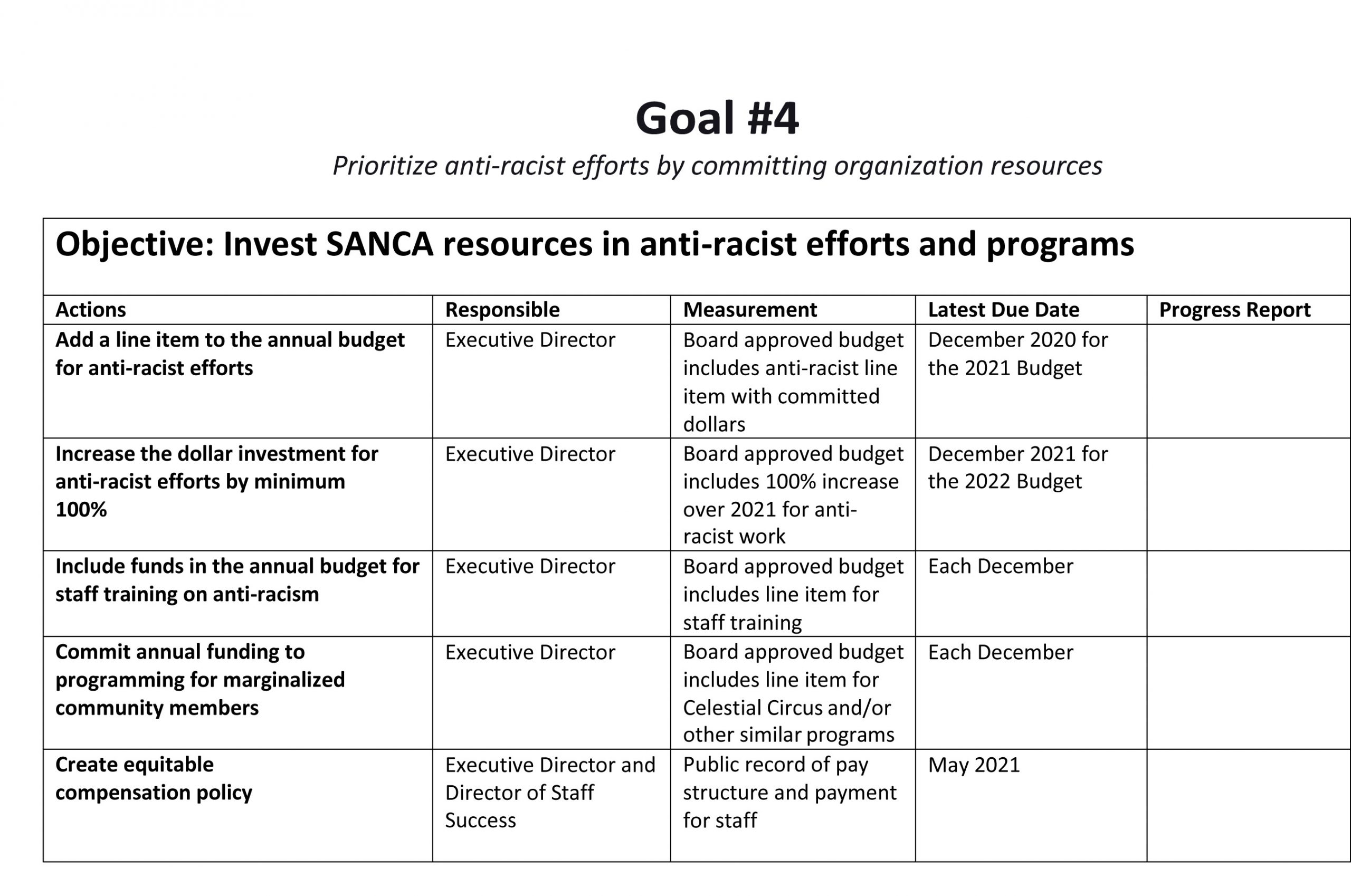
After education, we will evaluate the organization and structure to find ways to eliminate racism and ensure equity. For example, we need to look at our HR hiring, evaluation, and compensation practices. We also know that anti-racism training will be critical. It won’t end bias, but it’s a start. Mentorship of BIPOC employees will be an organizational priority to prepare them for leadership roles.
I came out of HR where we have talked about diversity for years and years, yet Black people have continued to be under-represented at the Board and leadership level in organizations. It’s important to have a genuinely inclusive workplace to be able to recruit diverse employees and to serve our community. Anti-racism is a life-long project. We are very committed to addressing racism on an individual and systemic basis, and justice is our ultimate goal.
Manjit (co-chair of DEI Committee): First, let’s start with two definitions:
– Anti-racism – Coined by Ibram X. Kendi who said that the opposite of racist is NOT “not racist.” That is upholding the status quo. The opposite of racist is “anti-racist” – opposing racism and the oppression of marginalized groups by actively dismantling the power structure.
– White supremacy is the culture that upholds the white power structure and disenfranchises BIPOC (Black, Indigenous, People of Color) communities.
We need to be transparent about racial inequity in our organization and combat the inherent racism of the non-profit structure. SANCA has taken a big step in forming this team.
Actions we have taken so far:
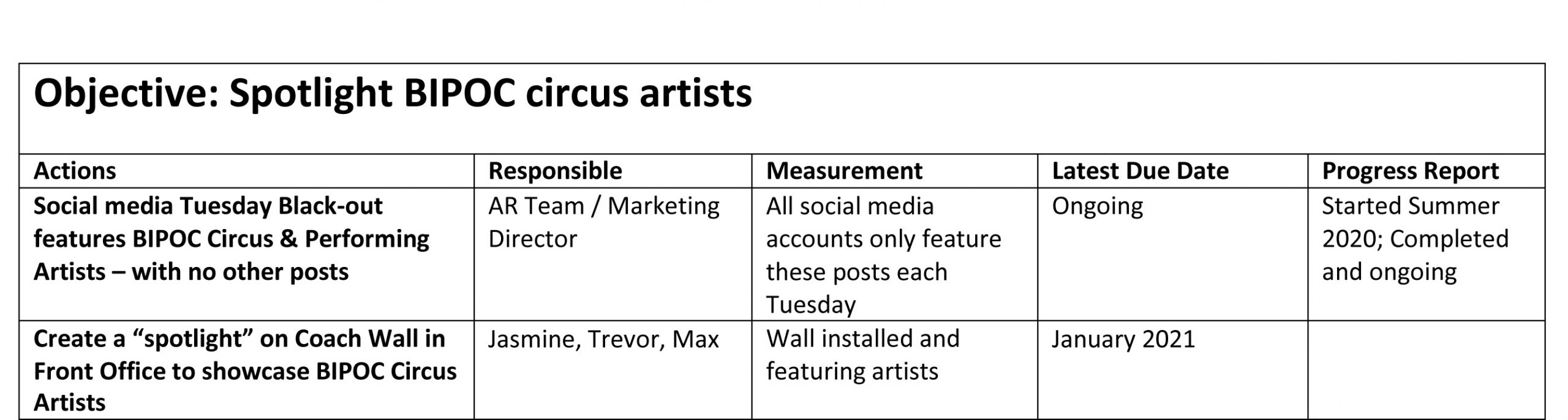
1. #BlackOutTuesday where we amplify Black circus and performing artists on SANCA’s social media.
2. An Anti-racist book club is running throughout the year, so that people can read about how to be better allies.
3. The Power of Three – We’ll share three resources every Tuesday – books, podcasts, movies to learn how to be better allies to marginalized communities.
4. We are developing a land acknowledgement to honor the ancestral land of the Duwamish people where SANCA resides.
Flying Trapeze Tent Upgrades
Our financial reality: We made it through COVID in the spring fairly unscathed thanks to strong community support, but this summer we are bringing in about 10% of the earned revenues that we normally bring in. However, we are still keeping an eye fixed on the future and how to maintain the vibrancy that we had prior to the pandemic.
Interview with Katie Wagman, Flying Trapeze Program Co-Director
JT: What is the history of the tent and what does it need? Katie: The flying trapeze tent was built in 2009. The tent was purchased from Big Top Shelters in Florida, and it has a life expectancy of 5-10 years. We have done maintenance over the years, and the tent has lasted a long time. The structure is sound, but in the future, we will need to replace the tent skin and add insulation. This will cost $60,000 for materials. Currently, the tent is like an outdoor environment, e.g. warm/hot in summer and cool/cold in winter. Insulation will regulate the temperature year-round.
JT: It’s going from camping to glamping.
JT: How have flying trapeze classes been this summer? Katie: On the staff and student side, nobody knew what to expect, but the smaller class sizes and shorter classes have been great for getting fliers back in shape. We have had a cool mix of returning and new fliers. Everyone is more than happy to comply with mask-wearing. We’ve had many requests to keep some of the shorter classes even after we can return to normal service.
Audience Q&A
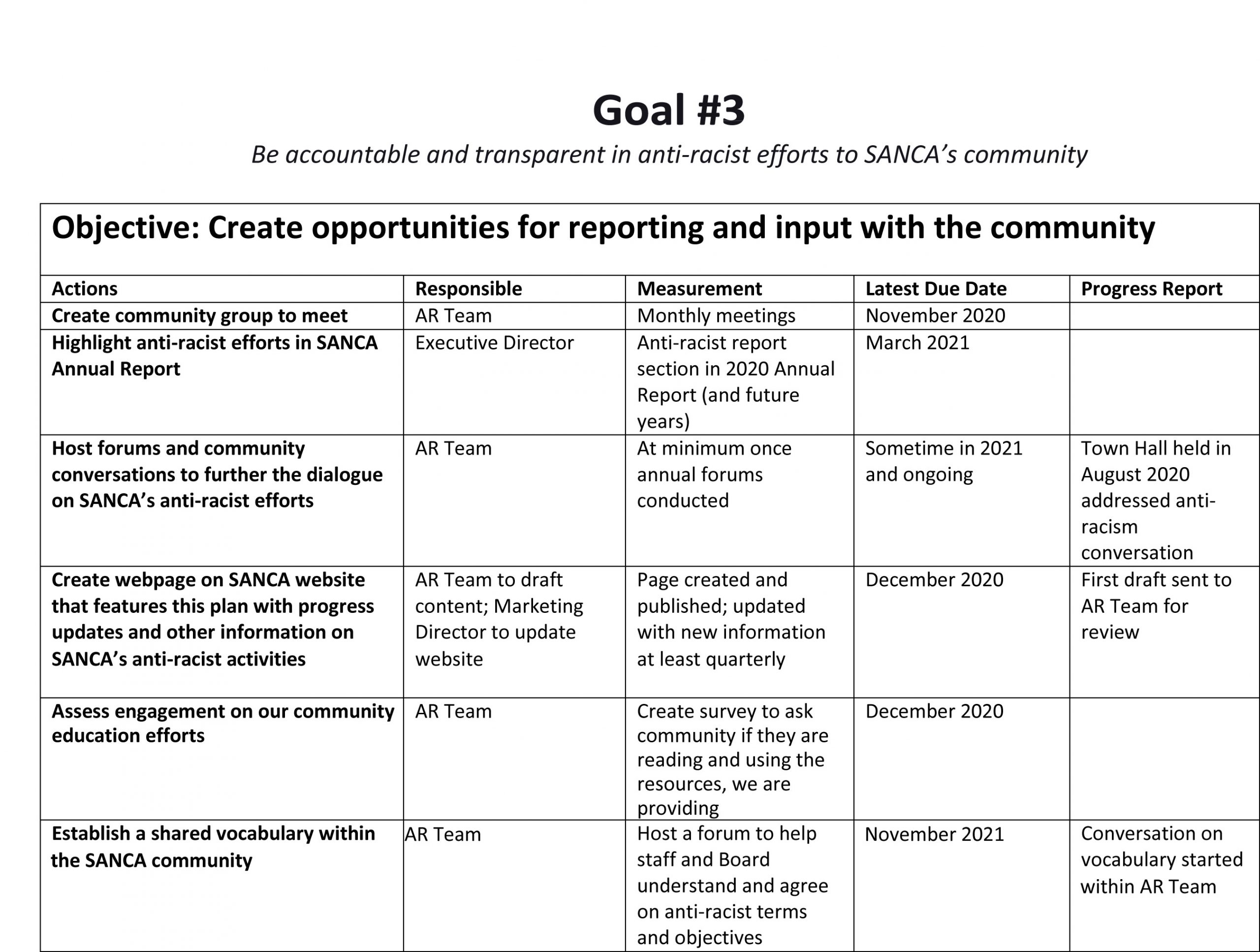
Q: Diversity – What does success look like? What will you be measuring? A: More diversity on the board, in leadership, and the staff. It will be evident to the community. The process is that the DEI team will start to build a plan for SANCA with specific goals, action steps, and a timeline. The Board will review and sign off on it and then we will present it to the community. We are also going to start producing an annual report at SANCA each year that will include DEI reports.
Q: What was your DEI vision from the beginning? A: We were being inclusive from the beginning, but at that time we were not doing true introspection on our racial bias. Having a formal committee looking at this with intelligence and education is wonderful.
Q: At the current burn rate, how long can SANCA stay afloat? A: If the enrollment numbers we’ve seen in summer remain this low in the fall and going forward and we did nothing differently, we would still make it to December. However, if we do not increase tuition income this fall, we may have to cut expenses to go beyond. There is uncertainty for when people will feel comfortable coming back to the gym and Fall will be a test for us. We hope that people will return to their circus classes and training indoors.
SANCA is deeply grateful for the following institutions, donors, and supporters who have provided extra support during the COVID-19 pandemic or major annual support in 2020.
The Carla Y. DeVrieze Memorial Fund
D.V. & Ida J. McEachern Charitable Trust
The Growing Tree Foundation
Jimenez Family Fund
Kevin Ruddell & Heather Kroll, Libby Cunningham & Mike O’Leary, The Randles Family, David & Dana Taft, Jon & Melissa McClintock, Adam Noble & Ammi Spencer, Beth Heritage, Daniel Nidzgorski & Casey Peel, and John Cornicello Photography.
SANCA would especially like to thank all our many students and families who have made extra gifts of support, and who donated their spring tuition or camp tuition in support during the period that SANCA was closed due the COVID-19 pandemic.
Sarah Hess could be one of the most fun bundles of energy ever to walk into a circus classroom! She is a long time SANCA student and adventurer of skills. In her four years at SANCA she was enrolled in Flying Trapeze, Partner Aerial, and Therapeutic Strength and Conditioning. She’d even drop into the TWC Alumni performance group from time to time. Her devotion to her circus skills, and the community that surrounds SANCA made joining online classes a no-brainer when it was time to quarantine. She has been taking partner aerial for years with coaches Nick and Amanda, so it was obvious that it was time to take her partner work to the floor and give partner acro a try. Sarah had only ever done acro once before back when it was legal to have hands on spotting, so this felt like new territory for Sarah and she had to summon her bravery to give this new style of circus a try. “One of my favorite parts about Circus is engaging my body and brain in challenges to learn totally new skills, as it forces me to stay humble, playful, and in a growth mindset.” Sarah says. She has found that she took naturally to L-basing acro because there were so many circus shapes that were familiar to her body. She has also really enjoyed having a physically challenging class to help her stay motivated and active between her weekly classes, especially when she can take this skill outside and in the fresh air. Since she’s been spending time inside without much physical activity having the tool that is acro to get out of her head, and help her body feel less stiff and more connected to the outdoors, and her partner Mike, has been important for her physical and mental well-being.
“When my boss asked me if I would be willing to work in a clinic serving COVID-19 positive patients, my only ask was that I be able to leave on time to make it to the Wednesday partner acro class, as moving and connecting with my circus community is a very important stress release for me. Although I have all the proper PPE and take precautions not to ‘bring the virus home,’ it’s also a relief for me to know that I can continue to ‘see’ my classmates and coaches onscreen without the uncomfortable question of whether I am putting them at risk.”
Aside from acro with Nick and Amanda she has enjoyed dropping into makeup tutorials with Billy Boy, hand balancing, and she even got creative at work when she had a free hour to attend Emma’s TWC Somatic Movement class using an exam table in lieu of a yoga mat. Sarah is a devoted student and truly a gem among our circus family at SANCA. It’s always a pleasure to see her and her partner Mike in class on Wednesdays as she is such a valued member of our acro family. Watching her continue to grow into her fun, circus self over the airways has been a pleasure!
So much has happened in the world this year it’s enough to make your head spin. While we’re experiencing so much rapid change good things are happening and voices being shared that may have been silent previously. The intention of this article is to give you some insight into voices currently speaking up and contributing to what the future could look like.
In our own home SANCA has formed a DEI team which is working on short term and long term changes to provide a sustainable change in the organization. Their most visible work with the circus community is the continuation of Blackout Tuesday. Rather than just posting a black square to signal the disruption of whiteness in our social media feed, SANCA DEI teams wants to highlight a Black circus artist on social media weekly. This effort is done to continue the dialogue of social justice, equity, and increase the visibility of Black artists.
Noeli Acoba added her voice to pushing this conversation in the beginning of June when she released this video that went viral about her experience with racism and circus. It includes her personal experience as expressed through a very powerful rope act. She suggests the circus industry could learn alot of Hamilton where actors of any race or background can portray any character and fill any role without limitations of needing to fit the right “look”. There is also a follow up.
Circus Talk has launched a series of panel discussions called Wake Up Call For Inclusion to listen to voices of our BIPOC international circus community. Noeli appears on this first panel. It’s moderated by Jonathon Lee Iverson, the first African-American (as he self defines), ringmaster of Ringling Barnum and Bailey. Iverson hosts another recent launch to Circus Talk, In Center Ring, where he interviews other community members. He also shares his experience and story with the podcast Hideaway Circus here.
Wake Up Call’s first installment is highly informative and touches on so many points of question that are echoed in many podcasts and interviews lately. Marco Motta, a Brazillian circus artist comes from a background in break dancing and is an award winning strapsperformer. His act and the article linked are relevant to this discussion as well. He mentions with his body type his lines differ from the balletic ideal of technique. The group discusses how can we move away from holding this Eurocentric dance form as the ideal and as more valuable than others. I also want to mention here, only this year has the pointe shoe been manufactured in more than one skin tone. Tights and leotards in a fuller range of skin tones without custom dye jobs haven’t been easy to find always either. Majo Cazares, a Mexican circus artist in Belgium, and Joseph Pinzon, an American Filipino Circus artist, bring up both the sides of stereotyping in shows through the lens of colonisation. How it is painful to experience jokes being made at the expense of your culture while being asked to perform these stereotypes or have other performers make jokes about your culture? Cazares mentions why is it okay to use sombreros to make fun of Mexicans still on stage? Why the impulse to keep trying to cast her as a fiery Latina and comment on her French being excellent instead of broken? Motta brings up often being cast half clothed and in chains. They all question how can you take power back at the same time without closing doors or approach management to question these choices? Pinzon tells a story about being asked to do Kung Fu in a comedy act, creative didn’t listen to his concerns. He found yelling things in different Asian languages during this act cathartic to his pain in the joke. There’s much to digest and think about. This one hour talk also goes into typecasting disciplines based on body types, how to do better, and includes personal experiences that range from being asked to perform stereotypes from cultures that might not be your own to forming your own company to be able to share different voices including your own on stage. Pinzon started his company in response to being up for multiple roles coming out of school with Cirque, but after speaking with casting and seeing who got jobs were all female. It’s a great frank and open start to listening to voices from many backgrounds in ways we can grow inclusion and varied experiences. This series is ongoing. Installment two focuses on organizational structures in circus. Installment three explores biases and barriers to the industry for women of color.
Shenea Stiletto, included on installment three of Circus Talk’s Wake Up Call, has spoken out about her experiences in her recently launched podcast, Live like an Acrobat. She is a two time world champion gold medalist in acrobatics, a USA gymnastics hall of fame member, and was a principal handbalancer in Varekai. She has multiple episodes sharing her experiences in gymnastics and circus and also interviews other community members. Her series is deeply emotional, honest, and heartbreaking at times. She shares one story of being on a contract where they wouldn’t costume her to fit her body type because they assumed the next person who would be wearing it would have a different shape. She tells of contracts where directors have only spoken to her in Spanish, assuming she’s Latina, not Black. She also relates times she’s had an easier time on contracts as a Black American than Brazilian or African artists who she’s seen be exploited. She comments on finding out at times from talking to her castmates sometimes her starting offer has been lower than that of other castmates. Cirque tried to recruit her when she was underage, she didn’t work for them till later. This show was not her first time working for Cirque. She had 12 days to learn this large part as an emergency replacement, on new equipment before being onstage. She goes into detail about instead of feeling celebrated as the first African-American in this role, she was not treated well on this show and repeatedly she wasn’t the right look for the role.
Veronica Blair moderates the third installment of Wake Up Call. She tells her story and hopes for the future to Iverson here. Blair is not only a performer, she runs Blackaerialist on Instagram and formed the Uncle Jr Project in 2010. Uncle Jr Project was named for Emanuel “Junior” Ruffin who worked his way from protege tier trainer to the center ring and was the first Black American inducted into the Ring of Fame. His story inspired founder Blair to start collecting the history and voices of Black circus performers past and present. Current Exhibits include aerialist Susan Vouticky and clown Robert Dunn.

 The Washington State Arts Commission and the National Endowment for the Arts has awarded SANCA a $3,000 general support grant. This grant will support, in part, continuing Circus at Home online classes for our community in 2020 & 2021.
 Partner work is an incredible way to work out, not just because you are using your own body and another person’s body to strengthen your muscles, but you are also learning to build strength in trust and communication through your practice. Sara and her partner Eduardo are perfect examples of two students who have built a beautiful foundation in partnership and have learned to strengthen themselves along the way. Sara says she had always wanted Eduardo to join her in her SANCA classes before the pandemic, but their physical distance from the SANCA gym, and work schedules always made it so difficult to get to the classes they wanted to take. But when the news came to shut down the gym, and quarantine orders were in place Sara and Eduardo found SANCA’s online offerings and the class they had always wanted to try together was now available in their own home. Now, three months later, they adore their online class. They have rearranged their weekly workouts, and business meetings so they can make it on time every time. “This is a class we enjoy so much, not only as a workout, but mostly as a couple. This is a moment to connect, work together, enjoy each other, build trust and more than ever, strengthen our relationship.”
 Kevin joined SANCA’s Board of Directors in the fall of 2019, but he and his family have been a part of our SANCA community since our early days. Kevin retired from the world of writing software in 1997 to be an at-home dad. Kevin previously served on the Board of Northwest Girlchoir for seven years, including two years as Board President. He has degrees in Physics and Computer Science. During his twenties, his creative outlet was Modern Dance, and he is pleased to now find artistic expression in circus. Kevin also enjoys photography and took formal and performance photographs for Northwest Girlchoir for many years, and several of his photos from SANCA’s flying trapeze tent have appeared on the SANCA website. Other hobbies include Alpine skiing, open water swimming, martial arts, hiking, travelling, and languages (French, Italian; some Spanish, Mandarin, Vietnamese; a little Latin, Irish, Japanese, Icelandic, German, Greek, Esperanto).
 Kevin:
 We are still in the middle of so many things happening this year. We previously talked about some of the BIPOC voices in circus currently sharing their stories. This is a continuation of that prior
  We all miss going to shows and live performances and I’m right there with you. Luckily there is still a way to watch circus performances from your couch! I was recently directed by a fellow circus colleague to a circus specific streaming service called
  Adam Noble joined SANCA’s Board of Directors in 2017 and currently chairs SANCA’s Development Committee. He works as a Business Development Executive for aerospace at Boyd Corporation, and has a degree in engineering from the United States Naval Academy. Adam served in the Navy as a nuclear-trained Surface Warfare Officer. Prior to having kids, Adam was an avid swing dance competitor, performer, teacher, and DJ. In addition to work, family, and SANCA, Adam is a zealous wine collector, a slow but enthusiastic runner, and an ardent Seattle Sounders supporter.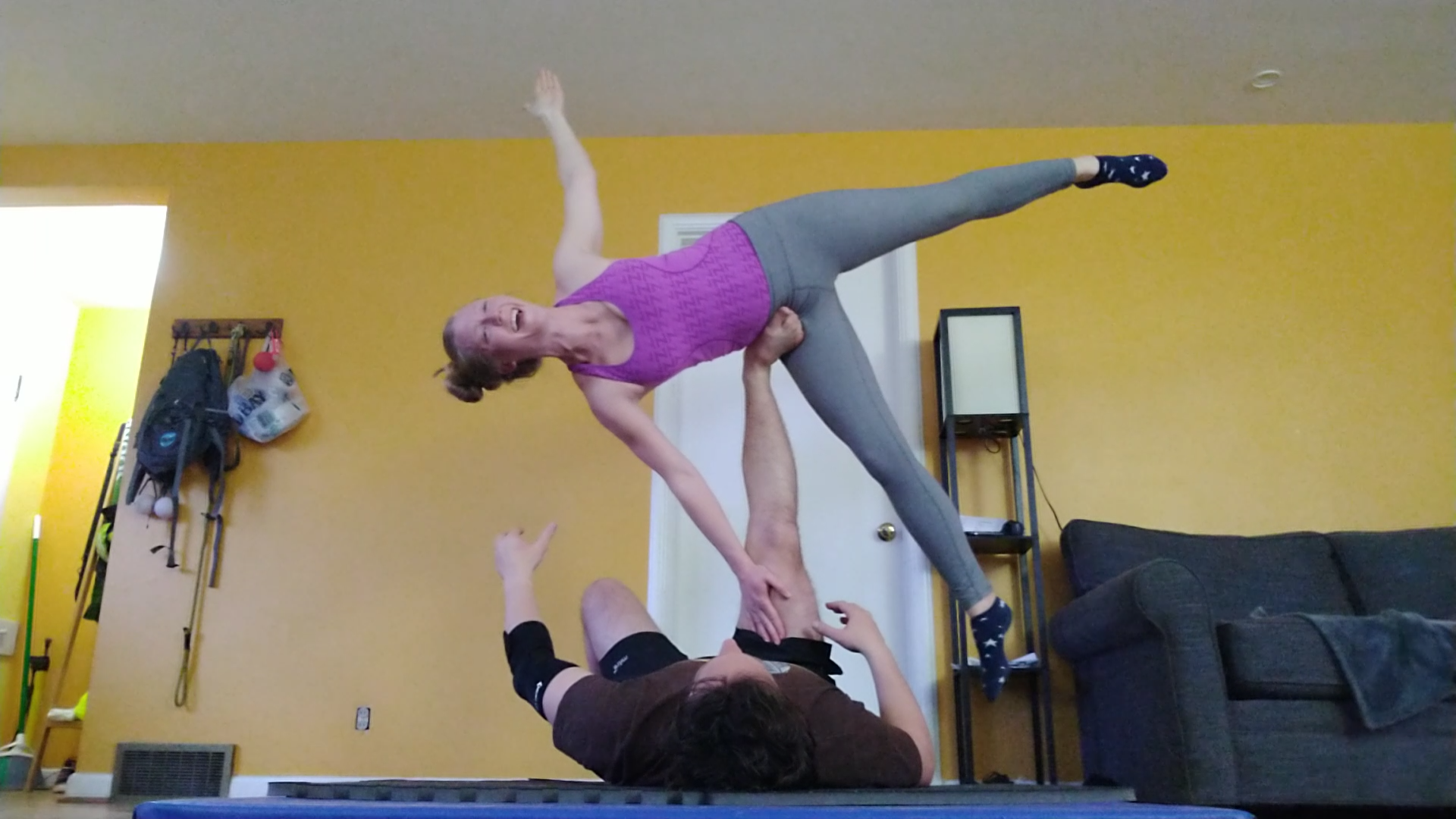


 So much has happened in the world this year it’s enough to make your head spin. While we’re experiencing so much rapid change good things are happening and voices being shared that may have been silent previously. The intention of this article is to give you some insight into voices currently speaking up and contributing to what the future could look like.