My summer at Camp Tanuga
This summer I took a sabbatical from SANCA and my day job of being a Registered Nurse in the ER, and ventured to Michigan and a camp called Camp Tanuga. There I got the opportunity to teach flying trapeze full time, an experience I’ve been longing to have since I started coaching at SANCA a few years ago.
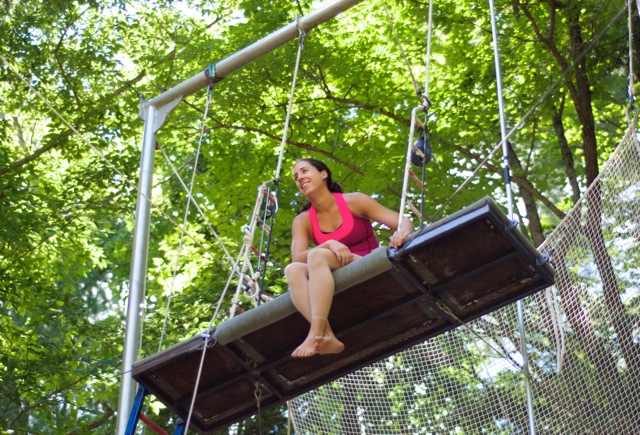 Tanuga is located in northern Michigan, about 40 minutes outside of Traverse City, with the closest town, Kalkaska, about 15 minutes away. For someone that grew up in a big city then moved to the Seattle metropolis four years ago, camp was an adjustment. There’s no supermarket around the corner, no redbox down the road, and Internet service was sometimes a bit shaky. That being said, my summer was full of new and fun experiences not involving technology or stores down the road.
Camp Tanuga was established a little over 60 years ago and still carries on many of the traditions that were started back then. In fact, many of the kids are 2nd or 3rd generation campers. The majority of the campers, who are between 7 and 15 years old, live in or around the Detroit area, although there are also campers from Colorado, Florida, California and other states. Tanuga is also somewhat of a SANCA tradition as a few of the staff members from the fly tent have also worked there in the past, including: Paul Peterson, Chris Johnston and Spencer Stevens.
Every day at camp was an adventure, with the schedule often changing at the last minute. To my type A, gotta have a plan self, this was probably the biggest struggle of the summer. Most days, however, my schedule went something like this:
 8:30 Breakfast
10:00 Instructional 1 (Flying trapeze)
11:20 Cabin Activity (Flying trapeze)
12:15 Lunch
1:00 Rest hour
2:00 Optional (training time for us or sometimes teaching a class)
3:30 Instructional 2 (Flying trapeze)
4:30 Instructional 3 (Flying trapeze)
6:30 Dinner
7:30 Evening Program
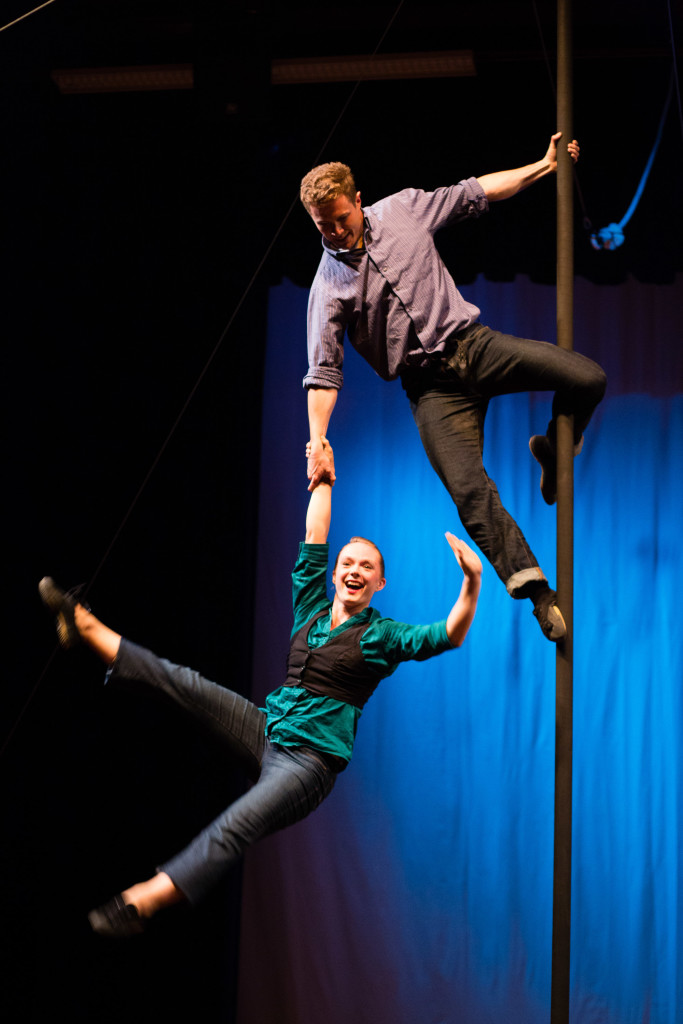
Basically, I was immersed in our three-person trapeze team world most of the day. I loved getting to teach new and returning campers new tricks, see them grow as flyers, and see joy in their eyes every time they caught a new trick. In this way teaching at camp and at SANCA are very similar. Both have individuals who have been flying for quite some time, as well as brand new flyers. It has been incredibly rewarding for me working with both types of students.
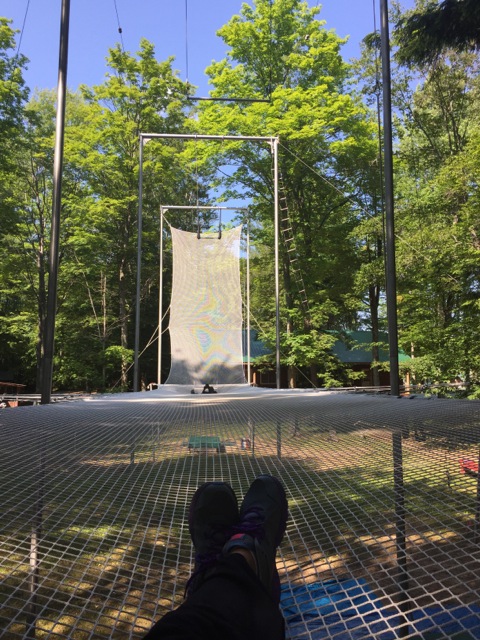
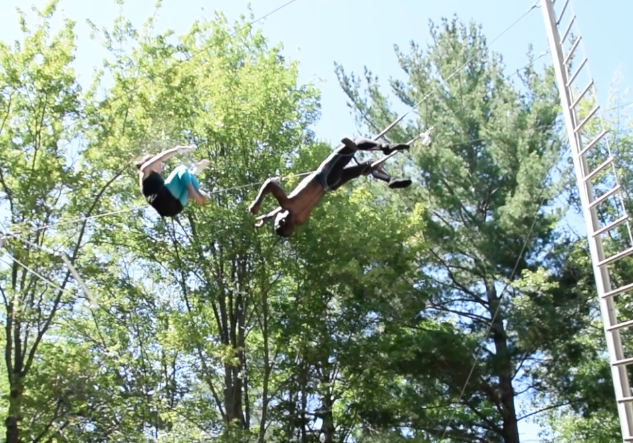 The other part of camp that I loved was getting to grow as a flyer myself. My cabin was about a 10 second walk to the trapeze (give or take a few seconds). It was a dream to be able to walk out my door and fly every day. This summer I faced a lot of fears that I have has a flyer. I was pushed by the people on my team to go to new heights (so to speak), and believe I grew a lot as a trapeze artist, coach, and person. I even caught my double out of safety lines for the first time, something I hadn’t even fathomed I would do this summer.
Camp Tanuga was an experience. Was everything perfect? No. Did I miss Seattle, my friends and the SANCA community? Absolutely. But, this summer at Camp Tanuga was a summer I will never forget. I got to teach some amazing campers, met some fantastic people, and got to explore beautiful northern Michigan. I also got to do something that I love every single day – flying trapeze.
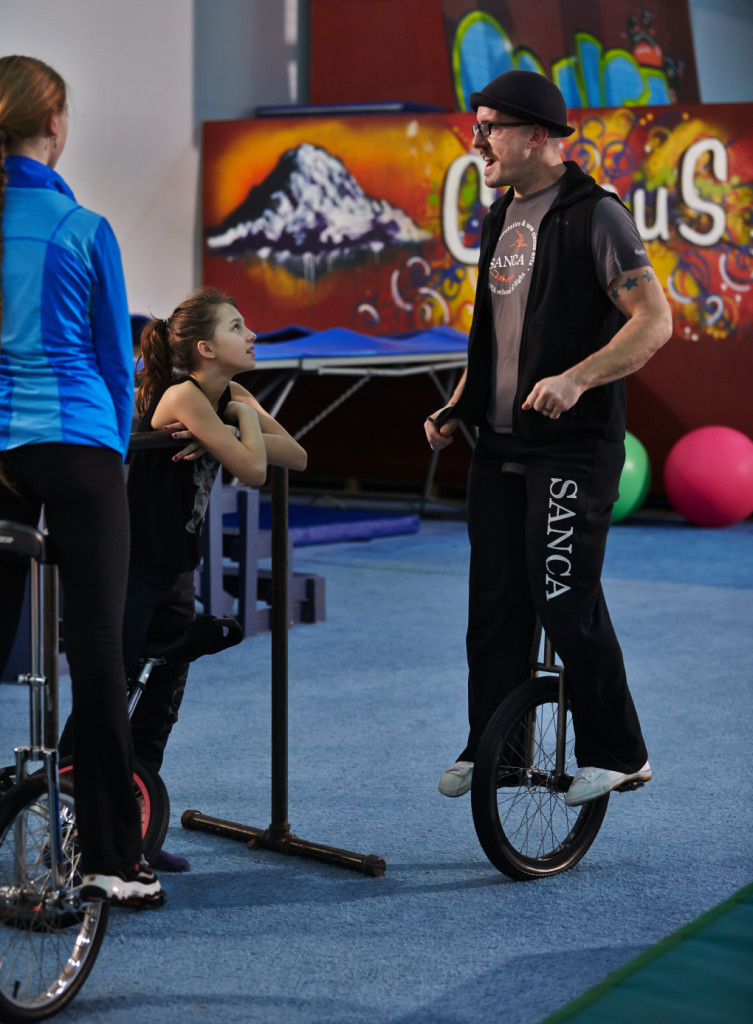
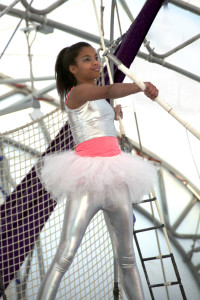 Dyani first learned about SANCA from a friend who was taking classes. She thought that circus looked like a fun and way to get stronger and learn new skills. Watching other people perform circus skills was really inspiring to Dyani, and she wanted to learn it all. It wasn’t long before she started taking multiple classes – including Unicycle, Teen Aerial, and Flying Trapeze.
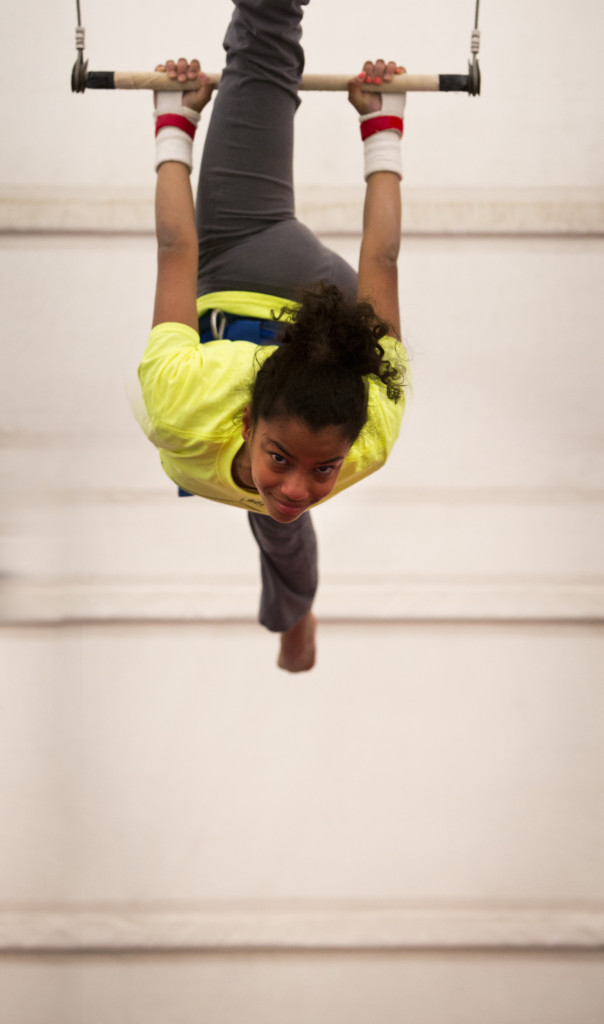 Dyani’s first performance with the Junior Fly Team was in the fall of 2014. She recalls being very nervous and excited about the show, but she felt really good about herself when she heard the audience applauding. One of her most memorable moments, Dyani notes, was her first time flying without spotting lines. She says it was scary at first, but great adrenaline and a huge achievement for her.
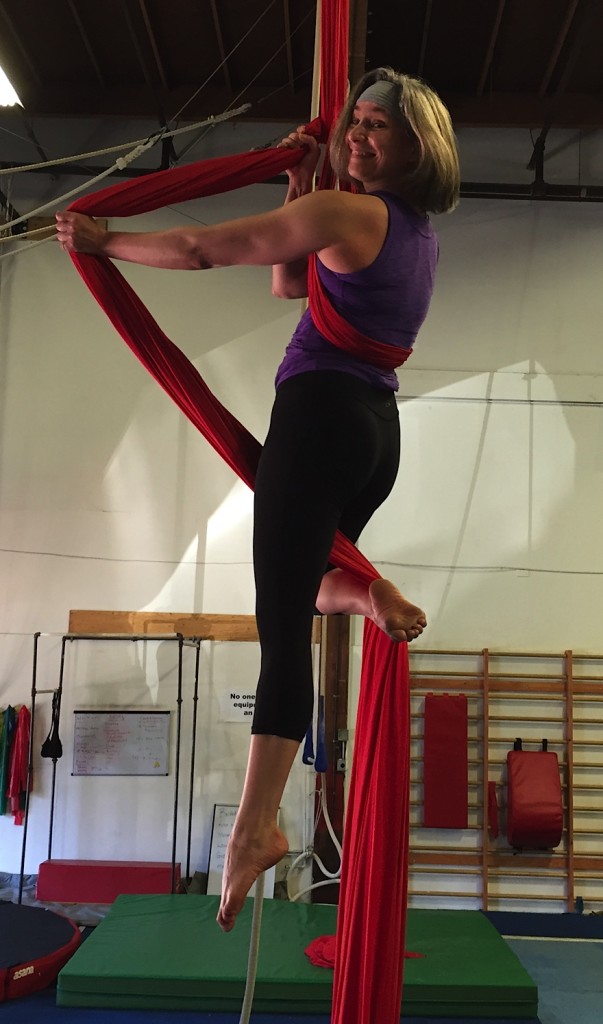 Randi Morrison discovered SANCA—Seattle’s only nonprofit
circus school—in 2010 when a friend invited her to come to a circus class. She’s always been an active person, but she’d never done anything like circus before. Randi was delighted with the openness of SANCA and the mixture of people of all ages and abilities learning and working together. The atmosphere was very fun and happy—people everywhere were smiling.
Randi Morrison discovered SANCA—Seattle’s only nonprofit
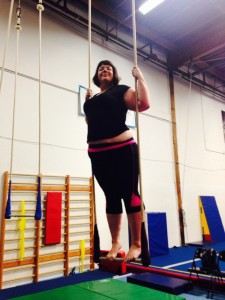
circus school—in 2010 when a friend invited her to come to a circus class. She’s always been an active person, but she’d never done anything like circus before. Randi was delighted with the openness of SANCA and the mixture of people of all ages and abilities learning and working together. The atmosphere was very fun and happy—people everywhere were smiling.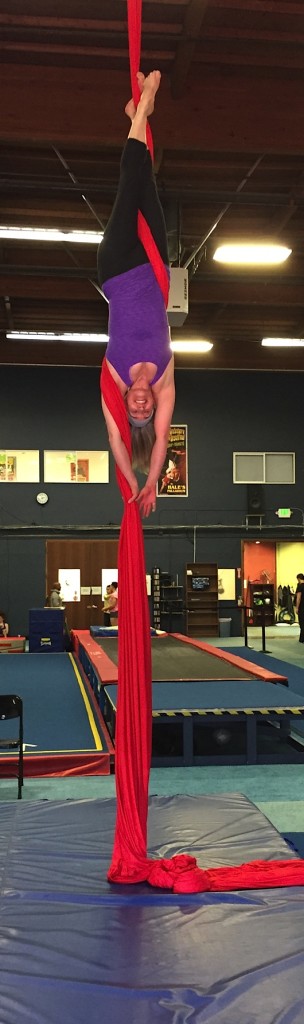 Randi’s growth as an aerialist wasn’t always easy. She repeated the Introductory Aerial class until she had the strength and skill to progress to more advanced classes. As her skills grew, Randi had a hunger for progress that outpaced her once-weekly classes. She began taking private lessons twice a week, which eventually led to working with SANCA coaches Tyler and Carey to create a personal, two-week, intensive-training program.
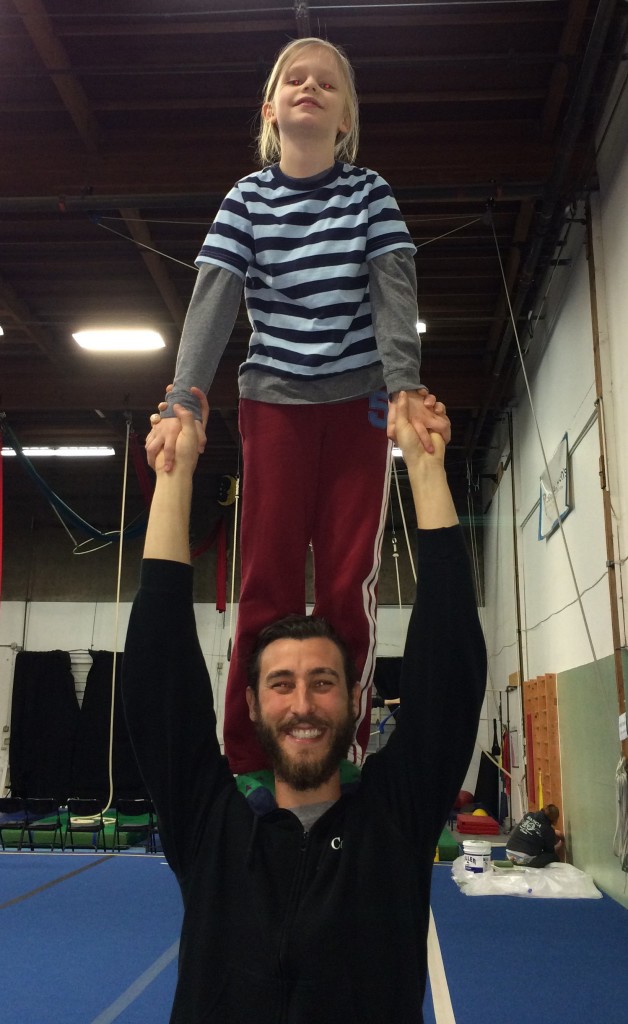 Elijah has grown up at SANCA, starting with Baby & Me classes with his mother Rebecca six years ago. At first, they came to SANCA for fun, but as Elijah grew he struggled with movement and balance — they discovered that he had Sensory Processing Disorder and motor delays. He took longer to learn movement skills such as learning to walk up stairs, and cross-body motions were harder for his body to understand. Elijah needed to be talked through how to move his body.
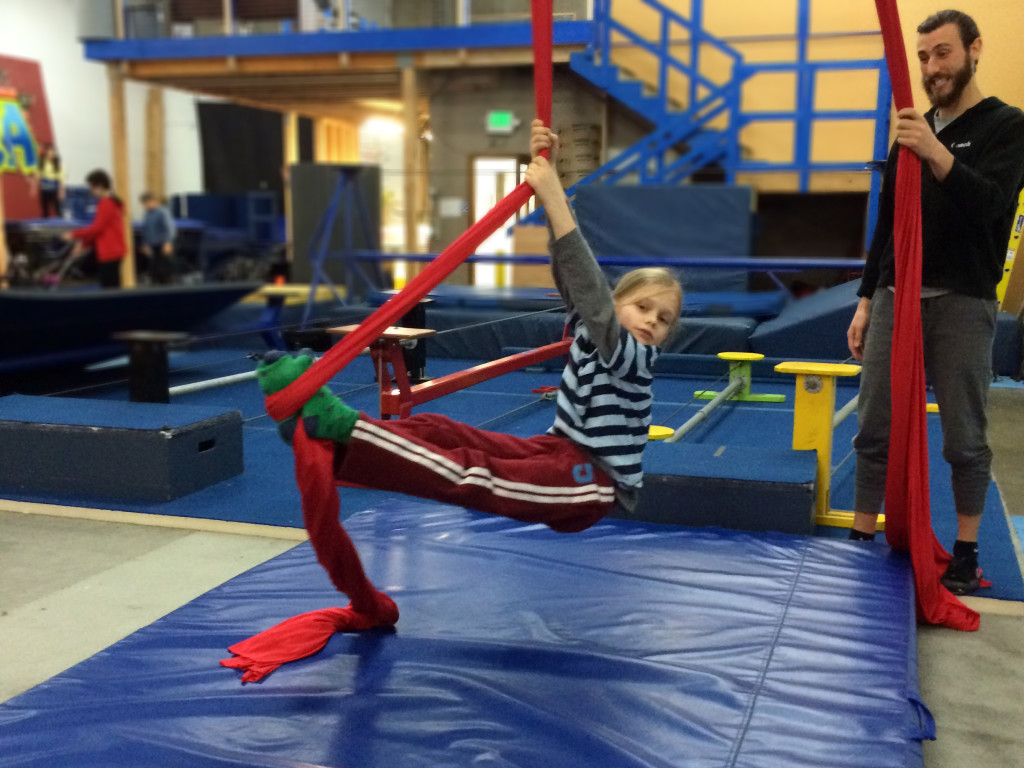 Elijah used to find jumping very difficult and he was afraid to try it. Tyler was able to break down the skill of jumping into very small steps that were easier to learn. Tyler could see that Elijah was able to jump, but that he just needed the confidence to do so. Starting with small jumps, Tyler held Elijah’s hand; they eventually progressed to several jumps in a row together. Then Elijah held just one of Tyler’s fingers while jumping, and later Tyler followed behind Elijah, holding the back of his shirt as he jumped. Tyler shows Elijah that he can do a skill, and teaches him in small steps, which helps Elijah overcome his fear and build his confidence.
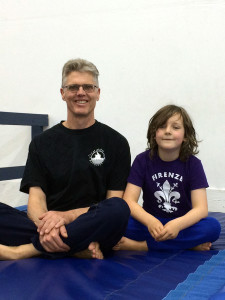 Dawson & Paul’s Story
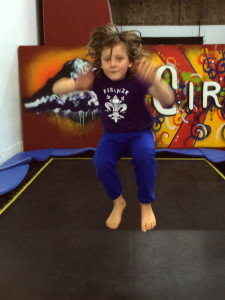 Both Dawson and Paul wanted to get more exercise, and Paul thought it was also important to show Dawson that adults need to exercise and learn new things – it’s not just for kids. They both benefit from taking class, and say it’s a lot of fun to do it together. Each has different strengths and they are both learning new skills. Dawson’s favorite activity is trampoline, while Paul enjoys juggling and tight wire.
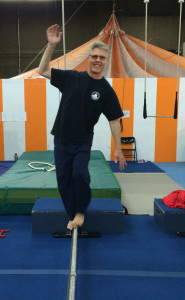 Paul says that learning to walk the tight wire was a big moment for him.